
Tactical Analysis
Pressing and Possession: Two Tactical Approaches
Pressing is how a team tries to win the ball back; possession play is how it keeps and uses the ball. Most teams combine both, choosing how high to press and how patiently to build attacks depending on their players and opponents.
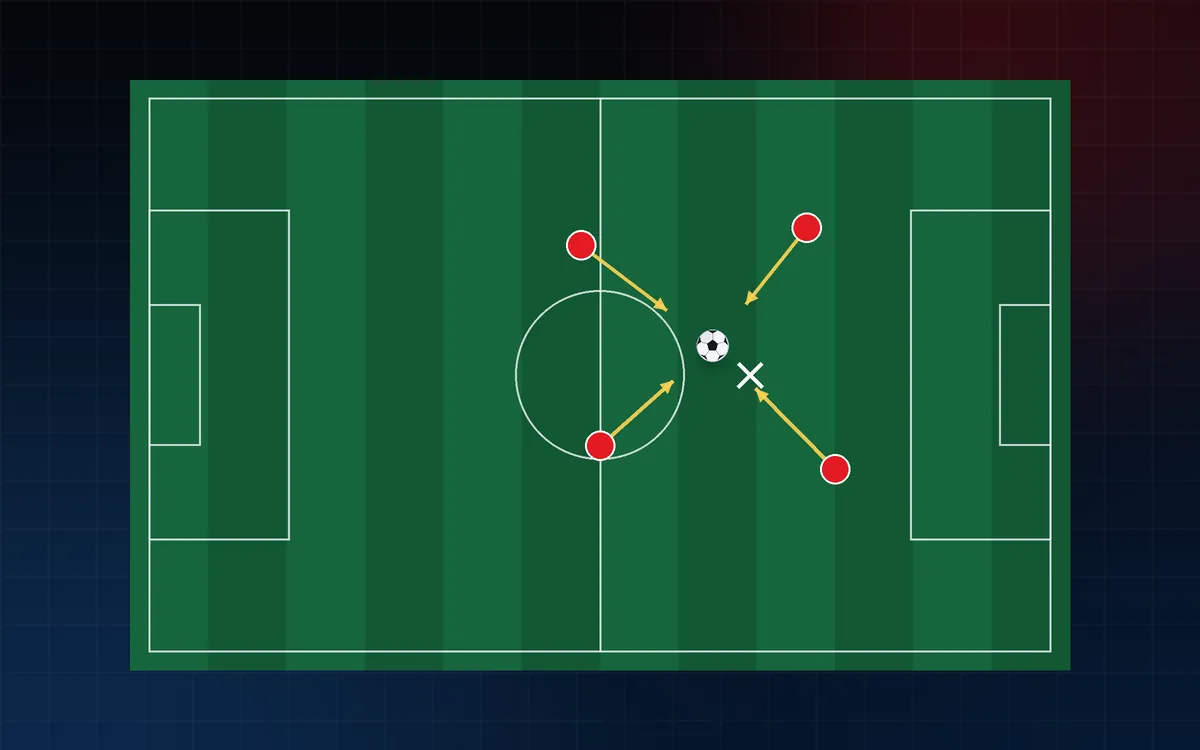
Pressing
Pressing means actively closing down opponents to force errors or win the ball. It works best when players move together; one player pressing alone is easy to pass around.
High press, mid block, low block
| Approach | Where the team defends | Aim | Risk |
|---|---|---|---|
| High press | Near the opponent's goal | Win the ball close to goal | Space behind the defence if the press is beaten |
| Mid block | Around the halfway line | Stay compact and block central passes | Opponents can build up freely at the back |
| Low block | Deep in its own half | Protect the penalty area | Invites sustained pressure and crosses |
Counter-pressing
Counter-pressing (from the German term Gegenpressing) is pressing immediately after losing the ball, while opponents are still disorganised. The aim is to win it back within seconds, often close to goal.
Possession play
Possession-based teams build attacks patiently with short passes, drawing opponents out of position before playing into the space that opens. The goalkeeper and centre-backs are part of the build-up. The risk is losing the ball in dangerous areas.
Direct play
Direct teams move the ball forward quickly, with longer passes, early crosses or fast counter-attacks. It can bypass a high press and exploit space, but tends to mean less control of the ball.
Spotting it in the statistics
- Possession share hints at a team's approach, but game state matters: a leading team often gives the ball up.
- Passes per defensive action (PPDA) counts how many passes an opponent is allowed before a defensive action. Lower values generally indicate more intense pressing.
- Where tackles and interceptions happen shows how high a team defends.